
Company Stamp vs Seal: What’s the Difference?
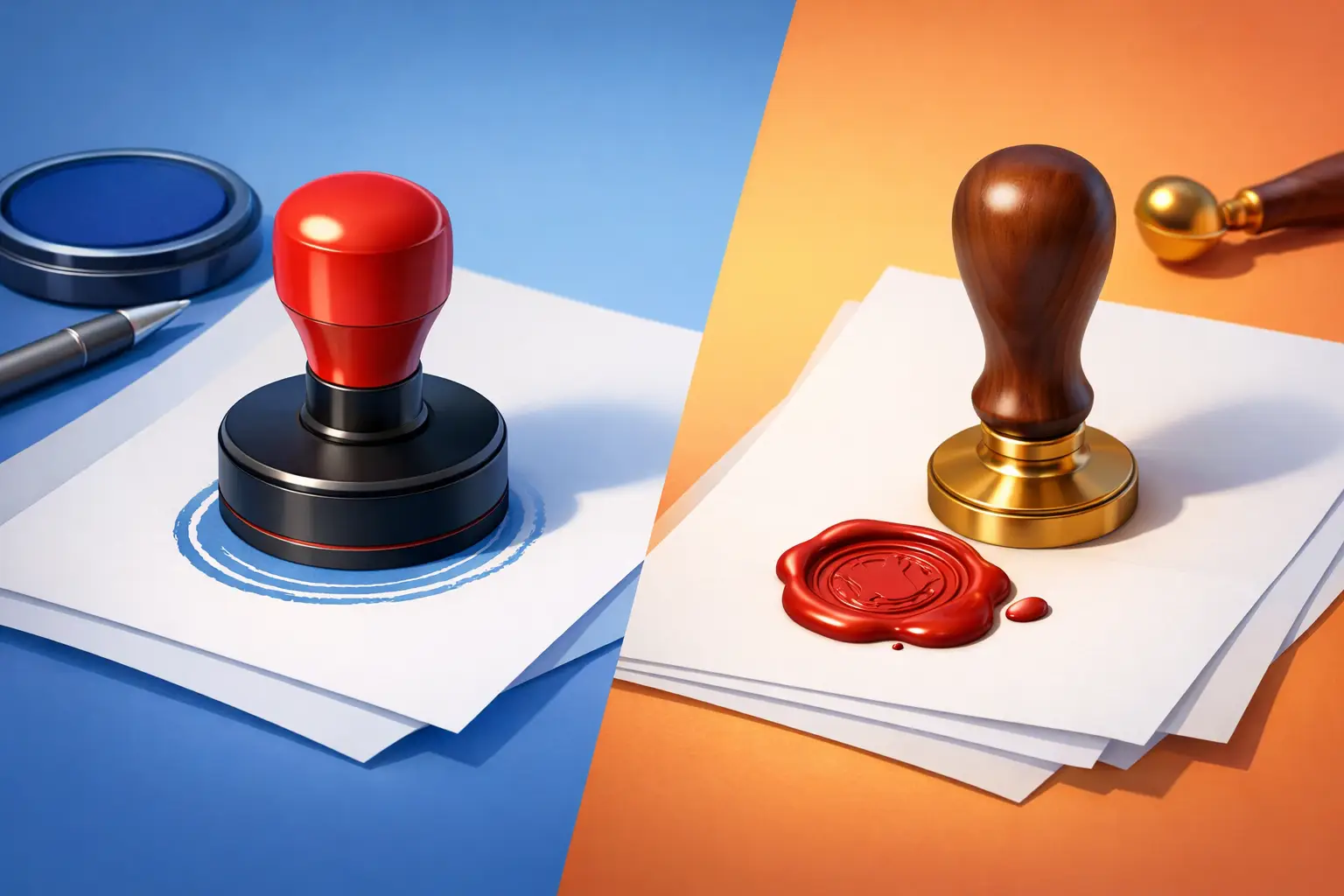
Company Stamp vs Seal: What’s the Difference?
A finance team rejects a document because it asked for a seal, while the office only has a standard stamp. A startup founder orders a wax seal for packaging, then realizes it cannot replace an official company mark. This is where confusion starts. When people compare company stamp vs seal, they are often talking about two tools that can look similar in purpose but serve very different business and branding needs.
For some organizations, the distinction is about formality and internal process. For others, it affects procurement, document handling, brand presentation, and turnaround time. If you are ordering for a company, law office, clinic, school, retail business, or product brand, it helps to get clear on what each one is actually designed to do.
Company stamp vs seal: the basic difference
A company stamp is usually an ink-based marking tool used to print business information onto paper or packaging. It can be self-inking, rubber, or pre-inked, and it typically includes details such as the company name, trade license number, address, phone number, or an approval phrase like PAID or RECEIVED. In day-to-day operations, it is built for speed.
A seal is usually more formal in appearance and function. In many business settings, a seal refers to an embossed impression, a wax seal, or another raised or specialty mark used to signify authenticity, authority, or presentation value. A seal is less about routine repetition and more about formality, ceremonial use, or premium branding.
That is the simple version. In practice, the right choice depends on what you are stamping, who will receive it, and whether the goal is administrative efficiency or a stronger visual impression.
What a company stamp is made for
A company stamp is a workhorse. It is designed for daily business use where speed, legibility, and consistency matter more than ceremony. Office administrators, procurement teams, accounts departments, and reception desks rely on stamps because they save time and create a standardized mark across high volumes of documents.
Common examples include company name stamps, signature stamps, date stamps, invoice stamps, certified copy stamps, and bilingual stamps with English and Arabic text. These are practical tools. They are used on invoices, delivery notes, payment records, internal approvals, document acknowledgment, and general paperwork.
The main advantage is efficiency. A self-inking or pre-inked company stamp gives a clean impression in seconds, with minimal setup and reliable repeat use. If your team handles paperwork every day, this is usually the most functional option.
It also offers flexibility. You can create a stamp that is compact for front-desk use, rectangular for document details, or customized for a specific department. For many companies, one official company stamp is not enough. They may need separate stamps for finance, HR, admin, stores, and authorized sign-off.
What a seal is made for
A seal carries a different weight. Instead of being optimized for speed, it is often chosen for authority, presentation, or tradition. An embossing seal creates a raised impression on paper, which gives documents a formal and tamper-resistant feel. A wax seal creates a premium finish often associated with certificates, invitations, luxury packaging, or brand storytelling.
For corporate and institutional use, an embossing seal may be applied to certificates, notarized-style documents, legal folders, or official paper where a visible raised mark adds credibility. For creative and retail brands, wax seals are more about presentation. They can elevate packaging, gift sets, product labels, or event stationery.
This is where many buyers make the wrong assumption. A seal may look more official, but it is not automatically the better tool for daily business operations. It depends on the use case. If you need to mark 200 invoices by noon, a wax seal is the wrong product. If you want luxury invitation packaging or a premium certificate finish, a basic office stamp will not deliver the right result.
Which one is more official?
This is the question behind most company stamp vs seal searches, and the honest answer is: it depends on the requirement.
In many office environments, the standard company stamp is the accepted practical tool because it clearly identifies the business and supports routine document processing. It is common, efficient, and easy to verify. That is why so many companies order it first.
A seal may feel more formal because of its visual presence, especially if it is embossed. But formality and necessity are not the same thing. Some organizations ask for a company seal out of habit or internal policy, while others simply need a company stamp containing the correct business details. The safest approach is to check the exact wording on the document request and match the tool to the purpose.
If someone asks for a seal, ask one follow-up question before ordering: do they mean an embossed seal, a wax seal, or simply the company’s official stamp? In real business settings, these terms are often used loosely.
How to choose between a company stamp and a seal
Start with the material you are marking. If it is paper used in daily administration, a company stamp is usually the practical answer. If it is a certificate, premium stationery, legal-style presentation set, or luxury packaging, a seal may be more suitable.
Next, think about volume. Stamps are built for frequent use. Seals are slower and more deliberate. If multiple staff members will use the marking tool throughout the day, a self-inking stamp is usually the better investment.
Then consider visual effect. Ink stamps prioritize readable information. Seals prioritize impression and presence. An embossing seal gives a refined, tactile finish. A wax seal delivers strong visual branding. They do different jobs.
You should also think about customization. A company stamp often includes more text, such as company details, department names, or operational wording. A seal usually works best with a tighter design, such as a company name, initials, logo, or emblem. Trying to force too much content into a seal can reduce clarity.
The branding angle: not every seal is for paperwork
For product brands, bakeries, boutiques, event businesses, and handmade goods sellers, the word seal often has nothing to do with formal documents. It is about presentation. A wax seal on a gift box, branded tag, or folded card creates a premium finish that customers notice immediately.
That is a very different decision from ordering a company stamp for accounts payable or front-desk approvals. One supports workflow. The other supports brand perception.
Some businesses need both. A corporate office may require a bilingual self-inking stamp for internal documents and an embossing seal for certificates. A luxury dessert brand may use a food-safe branding stamp for packaging and a wax seal for event orders. The right supplier should understand these differences and guide the design accordingly, rather than treating every request as the same product category.
Design and production details that matter
With stamps, clarity is everything. The text has to print sharply, line spacing must be balanced, and the layout needs to stay readable through repeated use. Size selection matters too. A stamp that is too small can become cramped. Too large, and it becomes awkward on standard documents.
With seals, pressure, material, and artwork style matter more. Embossing designs need the right line weight to create a clean raised impression. Wax seals need artwork that still reads well when pressed into wax. Fine details can look impressive on screen but fail in production if the design is too delicate.
This is why design support is not a small extra. It is part of getting a tool that performs properly. A well-made company stamp or seal should not only look good on approval artwork. It should work cleanly in real use, under real deadlines.
What most businesses should order first
If you are setting up a new company, replacing an old office stamp, or ordering for routine operations, start with the company stamp. It is usually the first essential because it supports immediate business activity. It is fast, durable, and straightforward to use across teams.
Add a seal when there is a clear reason for it – formal document presentation, brand elevation, ceremonial use, or a client requirement. That keeps your order practical and avoids paying for a specialty tool that will stay in a drawer.
For buyers who want both speed and a polished finish, the best setup is often a standard company stamp for operations and a separate embossed or wax seal for high-value presentation. Each tool has a clear role, and neither is forced to do the other’s job.
If you are still unsure, describe the document or product you need to mark, how often it will be used, and what information must appear. That usually reveals the answer quickly. The right impression tool is not the one that sounds more official. It is the one that fits the job, performs consistently, and makes your business look prepared from the first impression onward.
- Share
