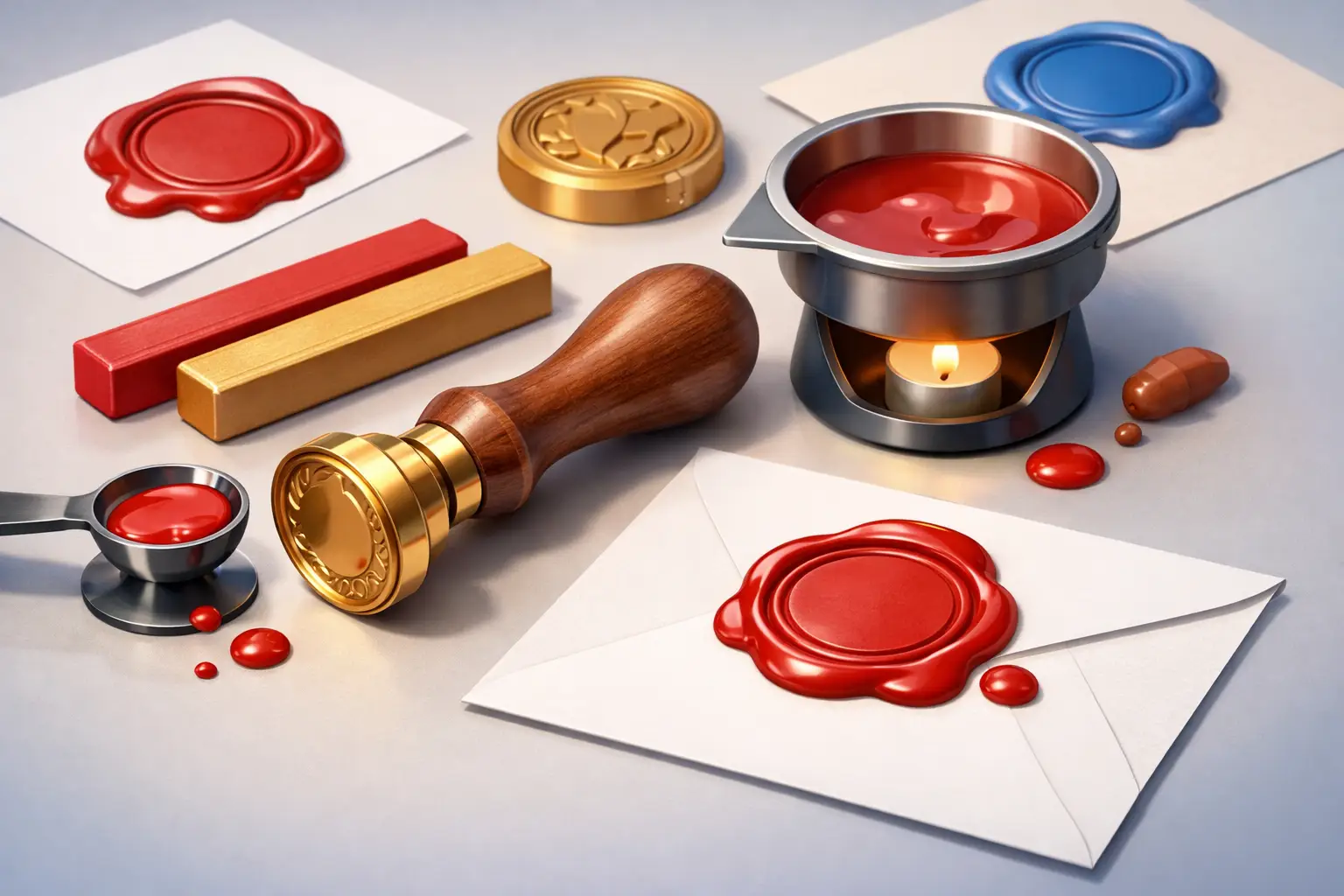
A wax seal can look expensive and memorable, or muddy and hard to read. The difference usually starts long before production. If you are figuring out how to design wax stamp artwork for packaging, invitations, certificates, or product branding, the goal is not just a nice sketch. The goal is a stamp that presses clearly, holds detail, and gives a consistent impression every time.
That matters whether you are ordering for a legal office, a luxury retail brand, a wedding suite, or a handmade product line. A wax stamp is a physical tool. Good design has to respect how metal engraving, wax flow, pressure, and scale work together.
How to design wax stamp for real use
The first decision is use case. Many customers start with the logo and stop there, but wax stamps perform differently depending on where they will be used. A monogram for envelope seals can carry finer detail than a stamp used on gift boxes in bulk. A branding mark for candles or soap packaging may need stronger, simpler forms because speed and repeatability matter more than decorative detail.
If the stamp is for formal business presentation, clarity should lead the design. If it is for creative packaging or event stationery, you can allow more ornament, but only within the limits of clean impression quality. The best results come from balancing aesthetics with manufacturing reality.
A common mistake is trying to fit too much into a small round stamp. Text, icons, borders, and patterns may all look good on screen, then blur once pressed into wax. In most cases, simplifying the artwork produces a more premium result than adding more detail.
Start with one focal element
Every strong wax stamp has a center of attention. That may be a monogram, a brand symbol, initials, a crest, or a minimal logo mark. Choose one main element and build around it. When the center is clear, the whole impression reads faster and looks more refined.
For business use, a symbol or initials often perform better than full company names. For weddings and personal seals, initials with a clean border are usually more elegant than long text. For product branding, a simple icon paired with a short name can work well, but only if spacing is generous.
If your logo has many thin lines, gradients, or tiny typography, it may need to be redrawn for stamp use. This is normal. A wax stamp version should be treated as a production adaptation, not just a direct copy of a digital logo.
Size, shape, and layout matter more than most people expect
Stamp size affects readability, wax coverage, and visual presence. Smaller heads can look neat and formal, but they leave less room for detail. Larger heads create a strong visual effect, but they need more wax and can become heavy if the design is too dense.
Round wax stamps are the most common because they center the design naturally and create a classic seal look. Square and oval options can work very well too, especially for modern branding or structured logos. The best shape depends on the artwork, not just preference. A tall emblem may fit an oval better than a circle. A geometric logo may feel sharper in a square layout.
When arranging the artwork, leave breathing room near the outer edge. Designs that sit too close to the border often lose clarity because wax spreads and pressure is not always perfectly even. Keeping the important elements slightly inward helps preserve a crisp impression.
Use line weight that can survive the press
Fine lines are the biggest technical issue in wax stamp artwork. On screen, thin details can look sophisticated. In wax, they may disappear or fill in. Thickening lines slightly usually improves the result without making the design feel heavy.
Very small negative spaces can also close up. For example, tiny gaps inside letters, flourishes, or detailed crests may not release cleanly in wax. If the design relies on micro-detail, it may need to be simplified or enlarged.
As a practical rule, bold, well-spaced forms usually stamp better than intricate ones. This does not mean every design has to be plain. It means details must be intentional and proportioned for a physical impression.
Raised or recessed thinking: design for the stamp, not the screen
When planning artwork, remember that a wax stamp works in reverse. The engraved head creates a pressed impression, and the final look depends on depth and contrast. What appears obvious in a flat digital file may behave differently once engraved into metal.
This is why contrast matters. A good wax seal design has clear distinction between the main raised areas and the recessed background. If those areas compete too much, the final seal can look busy. Strong contrast gives the design authority and helps it photograph better on packaging and stationery.
Borders can help, but only when used carefully. A thin outer ring adds structure and makes the seal feel complete. Too many rings or decorative edge textures can crowd the design. In most cases, one clean border is enough.
Text should be short and deliberate
Text on a wax stamp is possible, but it needs discipline. Full company names, taglines, event dates, and Arabic plus English combinations can all be done, but not every combination belongs on a small seal.
Short text works best. Initials, a family name, a single word, or an abbreviated brand name are usually more effective than a sentence. If bilingual customization is required, the layout should be planned carefully so neither language feels squeezed. Often, one script in the center with the second in an outer ring gives better balance than placing both at equal weight.
Typography also matters. Highly decorative fonts can lose legibility in wax. Clean serif fonts, classic monograms, and simple sans serif letterforms tend to perform better. The right font depends on your brand style, but readability should always come first.
Match the design to the material and application
Not every wax stamp is used the same way. A seal for luxury invitations is pressed slowly and carefully. A stamp for retail packaging may be used repeatedly in faster production. A seal intended for product presentation may be photographed often, which means visual consistency becomes part of the design brief.
For high-volume use, choose a simpler design with stronger shapes. It will press more reliably and reduce wasted wax. For ceremonial or occasional use, you can afford more detail because each impression gets more attention.
Wax color changes the visual result too. Gold, deep red, black, white, and metallic shades all affect contrast. A subtle design may look excellent in dark wax and weak in a pale tone. If your brand has a specific color direction, the artwork should be reviewed with that in mind.
Common design mistakes to avoid
The most frequent problem is overdesign. Too many elements compete inside a small area, and the finished seal loses clarity. Another issue is using a logo exactly as-is, without adapting it for engraving depth, line thickness, and spacing.
Low-resolution artwork creates avoidable production problems. A wax stamp should be prepared from clean vector-style artwork or at least a sharp, high-quality file. If the source art is blurry, the final engraving can only do so much.
Customers also sometimes choose size based only on appearance, not practical use. A large seal may look impressive online but slow down packaging operations. A small seal may feel discreet but make the text unreadable. The right size comes from balancing visual impact with daily use.
A practical design process that saves time
The easiest way to get a strong result is to start with your use case, then provide the clearest version of your logo, initials, or concept. From there, refine the artwork specifically for wax impression. That usually means simplifying details, adjusting line weights, and testing layout options before engraving.
If you are unsure, ask for a design review before production. This is where specialist support adds real value. A maker who understands stamp depth, metal engraving, and impression quality can spot issues that are easy to miss in a digital mockup. At Digital Stamp Maker, this is often where customers save time and avoid ordering a beautiful design that performs poorly in real use.
A good approval process should answer a few basic questions. Will the text remain readable at the chosen size? Are the lines thick enough for clean stamping? Does the design have enough open space? Is the shape right for the artwork? If those answers are clear before engraving, the final seal is much more likely to meet expectations.
How to design wax stamp artwork that feels premium
Premium does not always mean ornate. In wax stamp design, premium usually means controlled. The spacing is balanced, the details are intentional, and the impression reads instantly. That applies to a corporate seal as much as a wedding monogram or a product branding stamp.
If you want a stamp that looks sharp in person, works consistently, and supports your brand instead of complicating it, choose clarity over clutter. The best wax stamp designs are the ones that respect the material, the scale, and the way the tool will actually be used.
A strong seal leaves a lasting impression because it feels considered from the first sketch to the final press.